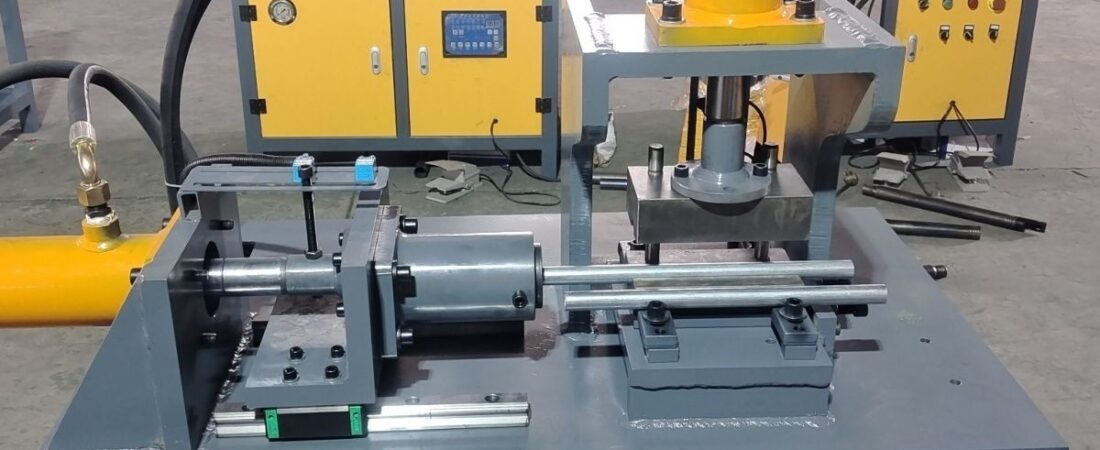
The short answer to whether a manual or hydraulic pipe bender is better is that neither is universally superior; they solve entirely different physical problems. Manual benders excel at low-volume, thin-wall, large-radius bends on low-carbon steel where portability and zero operating costs are paramount. Hydraulic benders dominate when dealing with thick-wall, high-yield-strength materials that exceed human physical limits. However, the hidden variable most fabricators ignore is thermal drift in hydraulic systems and operator fatigue in manual systems. For small-to-medium batch production, modern electric vertical benders often provide a more consistent, maintenance-free alternative to both.
The Physics of Pipe Bending: Manual vs Hydraulic
To select the right tool, you must understand the material properties you are deforming. Pipe bending relies on exceeding the yield strength of the material while keeping it below the ultimate tensile strength to prevent fracturing. According to ASTM standards, the yield strength of carbon steel (ASTM A53) is significantly lower than that of stainless steel (ASTM A312) or aluminum alloys.
A manual pipe bender relies entirely on the operator’s leverage. The maximum force you can apply is limited by the length of the handle and your physical strength. If you attempt to bend a 2.0mm wall thickness 304 stainless steel pipe using a manual bender, you will likely strip the gears or fail to achieve the desired angle, resulting in severe springback. Hydraulic benders solve this force limitation by using fluid pressure to generate tons of bending force, easily handling high-strength alloys and thick walls.
Technical Considerations for Tool Selection
Bending Radius and Wall Thickness Limits
The Centerline Radius (CLR) dictates the severity of the bend. Tight radii (e.g., 2x or 3x OD) induce high compressive forces on the inner wall and tensile forces on the outer wall. Manual benders typically struggle with tight radii on anything beyond 16mm OD because the required torque exceeds human capability. Hydraulic benders can easily pull tight radii, but without proper mandrel support, the high hydraulic force can crush the pipe wall, leading to unacceptable ovality.
Angle Accuracy and Springback
Every material exhibits elastic recovery, known as springback, once the bending force is removed. High-strength materials like stainless steel require over-bending to compensate for this. Manual benders make precise springback compensation difficult because the operator cannot apply a perfectly repeatable force. Hydraulic benders offer better force consistency, but they introduce a new variable: hydraulic fluid temperature. As the fluid heats up during continuous use, its viscosity drops, altering the ram speed and requiring constant angle recalibration.
Head-to-Head Comparison: Manual, Hydraulic, and Electric
While the debate often centers on manual versus hydraulic, introducing electric vertical benders into the comparison reveals a more practical solution for many fabrication shops. Below is a technical breakdown of how these three drive systems compare in real-world applications.
| Feature | Manual Pipe Bender | Hydraulic Pipe Bender | Electric Vertical Bender (Tubefabtech) |
|---|---|---|---|
| Drive Mechanism | Human leverage / gears | Hydraulic pump and cylinder | Electric motor and gearbox |
| Max Pipe OD | Typically up to 25mm | Up to 114mm or more | Up to 76mm (Model 76) |
| Wall Thickness Capacity | Thin wall (up to 1.2mm mild steel) | Thick wall (up to 4.0mm+) | Medium wall (up to 2.5mm) |
| Angle Accuracy | Low (operator dependent) | Medium (affected by fluid temp) | High (consistent motor torque) |
| Maintenance | Minimal (greasing gears) | High (fluid changes, seal leaks) | Low (no hydraulic fluid) |
| Price Range | $50 – $300 | $800 – $3,000 | $365 – $1,200 |
For a deeper technical analysis of drive systems, you can read our detailed guide on Electric Vs Hydraulic Pipe Bender.
Real-World Case Study: Stair Handrail Fabrication
To illustrate how these factors play out on the shop floor, consider a recent project from a mid-sized metal fabrication shop in Europe specializing in architectural metalwork.
- Pipe material: 304 stainless steel (ASTM A312)
- Pipe diameter: 38.1mm OD (1.5-inch NPS)
- Wall thickness: 2.0mm
- Bend radius: 3xOD = 114.3mm CLR
- Bend angle: 90 degrees
- Application scenario: Commercial stair handrail fabrication
- Equipment model used: Tubefabtech Model 63 vertical electric bender
- Production batch size: 50 handrail sections per week
- Budget range: $800-$1,200 for equipment, $0.50 per bend operating cost
- Common problems encountered: 3 degrees springback on stainless, 4% ovality at tight radius (when using previous manual/hydraulic tools)
The fabricator initially attempted this job using a heavy-duty manual bender. The 304 stainless steel’s high yield strength made it physically exhausting, and the 3 degrees of springback resulted in rejected parts. They then rented a 12-ton hydraulic bender. While the hydraulic unit provided enough force, the aggressive hydraulic stroke caused the 2.0mm wall to deform, resulting in a 4% ovality at the 114.3mm CLR, violating ANSI B31.3 standards for pipe fabrication which generally dictate ovality should remain below 3% for structural handrails. For more techniques on maintaining pipe integrity, check out our article on Prevent Pipe Kinking When Bending.
The shop ultimately invested in the Tubefabtech Model 63 vertical electric bender. The electric motor provided smooth, consistent torque without the hydraulic shock that caused the ovality. The vertical design saved 60% of their floor space, and the consistent motor speed eliminated the springback variance they experienced with manual tools. The equipment cost fell perfectly within their $800-$1,200 budget, and the operating cost remained negligible at roughly $0.50 per bend in electricity.
Common Mistakes Fabricators Make
Ignoring Material Yield Limits on Manual Tools
The most frequent mistake is attempting to bend high-strength materials or thick walls with a manual bender. This not only ruins the bend accuracy due to incomplete plastic deformation but can also permanently damage the bender’s gears and pins.
Overlooking Hydraulic Temperature Drift
Fabricators using hydraulic benders for batch production often fail to account for hydraulic fluid heating. After 30 minutes of continuous operation, the fluid temperature rises, changing the flow rate and ram speed. This leads to a drift in bend angles, requiring the operator to constantly adjust the limit switches.
Miscalculating Springback
Springback is not a fixed number; it varies based on material batch, wall thickness, and bend radius. Relying on a single dial setting without performing a test bend on the first piece of every new material lot will guarantee out-of-tolerance parts.
Choosing the Right Equipment for Your Shop
If your work involves occasional, light-duty bending of thin-wall mild steel in the field, a manual bender is the correct choice. If you are bending thick-wall structural pipes in heavy industry, a hydraulic or CNC platform bender is required.
However, if you are producing furniture frames, greenhouse hoops, handrails, or agricultural equipment in small-to-medium batches, a vertical electric pipe bender offers the best balance of power, precision, and cost. Tubefabtech offers the Model 38 for pipes up to 38mm OD, the Model 63 for up to 63mm OD, and the Model 76 for up to 76mm OD. These CE-certified machines provide consistent electric torque, eliminating the maintenance and thermal drift of hydraulic systems. For high-volume, multi-axis batch production with strict tolerance requirements, our CNC platform pipe benders with encoder digital displays and closed-loop angle control are the industry standard, priced between $5,800 and $14,000.
To understand the financial breakdown and ROI of different machines, review our comprehensive Pipe Bender Price Guide.
Frequently Asked Questions
Can a manual pipe bender bend stainless steel?
A manual pipe bender can bend very thin-wall stainless steel (e.g., 0.8mm wall thickness on a 16mm OD pipe), but it requires significant physical effort. For wall thicknesses above 1.2mm or diameters above 20mm, a manual bender will struggle to overcome the high yield strength of stainless steel, leading to inaccurate angles and potential tool damage.
How does hydraulic fluid temperature affect bending accuracy?
As hydraulic fluid heats up during continuous use, its viscosity decreases. This causes the hydraulic pump to deliver fluid to the cylinder at a slightly faster rate, increasing the ram speed. A faster ram speed alters the friction dynamics between the pipe and the die, which changes the amount of springback. This results in inconsistent bend angles across a production batch.
What is the maximum wall thickness a manual bender can handle?
For mild steel (ASTM A53), a high-quality manual bender can typically handle up to 1.5mm wall thickness on a 22mm OD pipe. If the material is switched to stainless steel or aluminum, the maximum manageable wall thickness drops significantly due to differences in yield strength and work hardening rates.
Get a Custom Quote
Selecting the right pipe bender requires matching the machine’s drive system and torque output to your specific material, diameter, and production volume. If you are producing architectural handrails, furniture, or greenhouse structures and need consistent results without the maintenance headaches of hydraulic systems, an electric vertical bender is likely your optimal solution.
Contact the Tubefabtech engineering team today. Provide us with your pipe material, outer diameter, wall thickness, and bend radius, and we will recommend the exact machine configuration for your shop. All our machines are CE certified, and we offer global shipping with delivery in 12 to 18 days. OEM and ODM options are also available for specialized fabrication requirements.