How to Prevent Kinking When Bending Pipe: 7 Proven Methods
Pipe kinking during bending comes down to seven root causes — each with a straightforward fix: mismatched dies (use correctly sized tooling), uneven force application (bend slowly and steadily), lack of internal support (use mandrels or sand filling), bending radius too tight (follow the 3×OD rule), unprepared material (anneal and remove hardening), insufficient wall thickness (maintain wall/OD ratio ≥ 0.1), and wrong machine for the job (match machine type to pipe specs). Get these seven right, and kinking becomes a non-issue.
Let’s break down each one in detail — starting with why pipes kink in the first place.
Why Pipes Kink: The Force Analysis
When you bend a pipe, the material experiences three stress zones:
- Outer wall (tension zone): The outside of the bend stretches and thins. Exceed the elastic limit, and the wall tears or collapses outward.
- Inner wall (compression zone): The inside compresses. Material piles up, causing wrinkles and buckling — this is what fabricators call “kinking.”
- Neutral axis: The line through the cross-section where neither tension nor compression occurs. The closer your bend stays to this axis, the less deformation you get.
Thin-walled pipes have very little material in the compression zone to resist buckling. When bending force exceeds the wall’s compressive strength, the pipe folds like a straw. Understanding this force distribution is the foundation for every prevention method below.
Method 1: Use the Correct Die Size
Mismatched dies are the #1 cause of kinking — period.
When the die groove doesn’t match the pipe’s outer diameter (OD), the pipe sits loosely or too tightly in the die. A loose fit means the pipe isn’t supported along its circumference, allowing walls to collapse inward. A die that’s too tight can pinch and deform the pipe before bending begins.
The rule: The die groove diameter should be 0.1–0.3 mm larger than the pipe OD. For a φ25 mm pipe, your die should have a groove diameter of 25.1–25.3 mm. TubeFab’s round pipe die set covers 8 sizes from φ19 mm to φ76 mm, and the square tube set covers 6 sizes from 20 mm to 60 mm — so you can always find a close match.
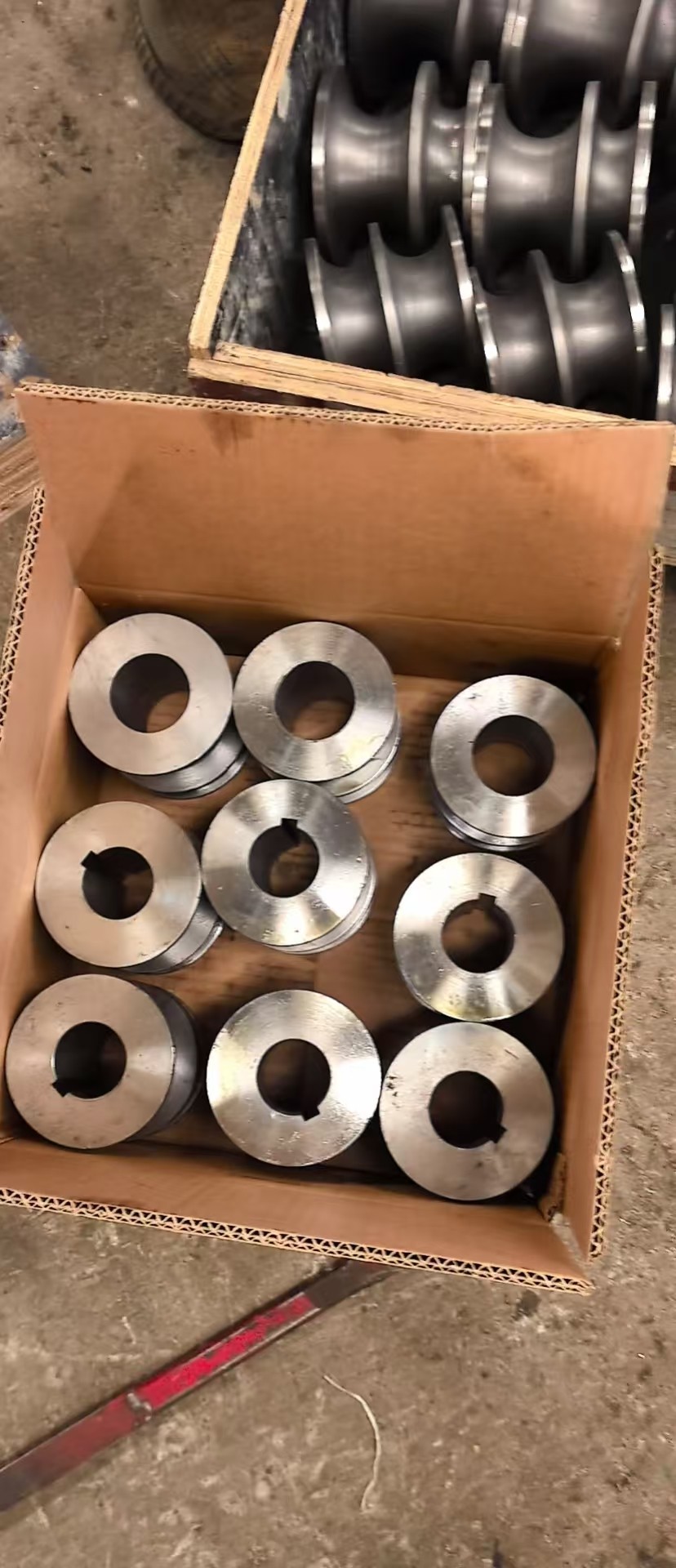
Before every job, measure the actual pipe OD with calipers — not the nominal size on the label, which varies by manufacturer. Then select the die that gives you that 0.1–0.3 mm clearance. This single step eliminates the majority of kinking problems we see in the field.
Method 2: Apply Force Slowly and Evenly
Sudden, jerky force is kinking’s best friend. When you yank a pipe bender’s lever or hit the motor switch hard, the pipe absorbs a shock load that far exceeds the steady-state bending force. That shock concentrates stress at a single point, triggering instant collapse.
Electric benders have a natural advantage here. A motor-driven bender applies force in a smooth, continuous motion — no human variability in speed or pressure. On the TubeFab vertical 76-type, the 2.2 KW motor drives a chain-and-gear transmission that delivers consistent torque throughout the bend. You control the pressure via the handwheel, turning it gradually to increase the top roller’s downward force. This lets you feel the pipe’s resistance and back off before things go wrong.
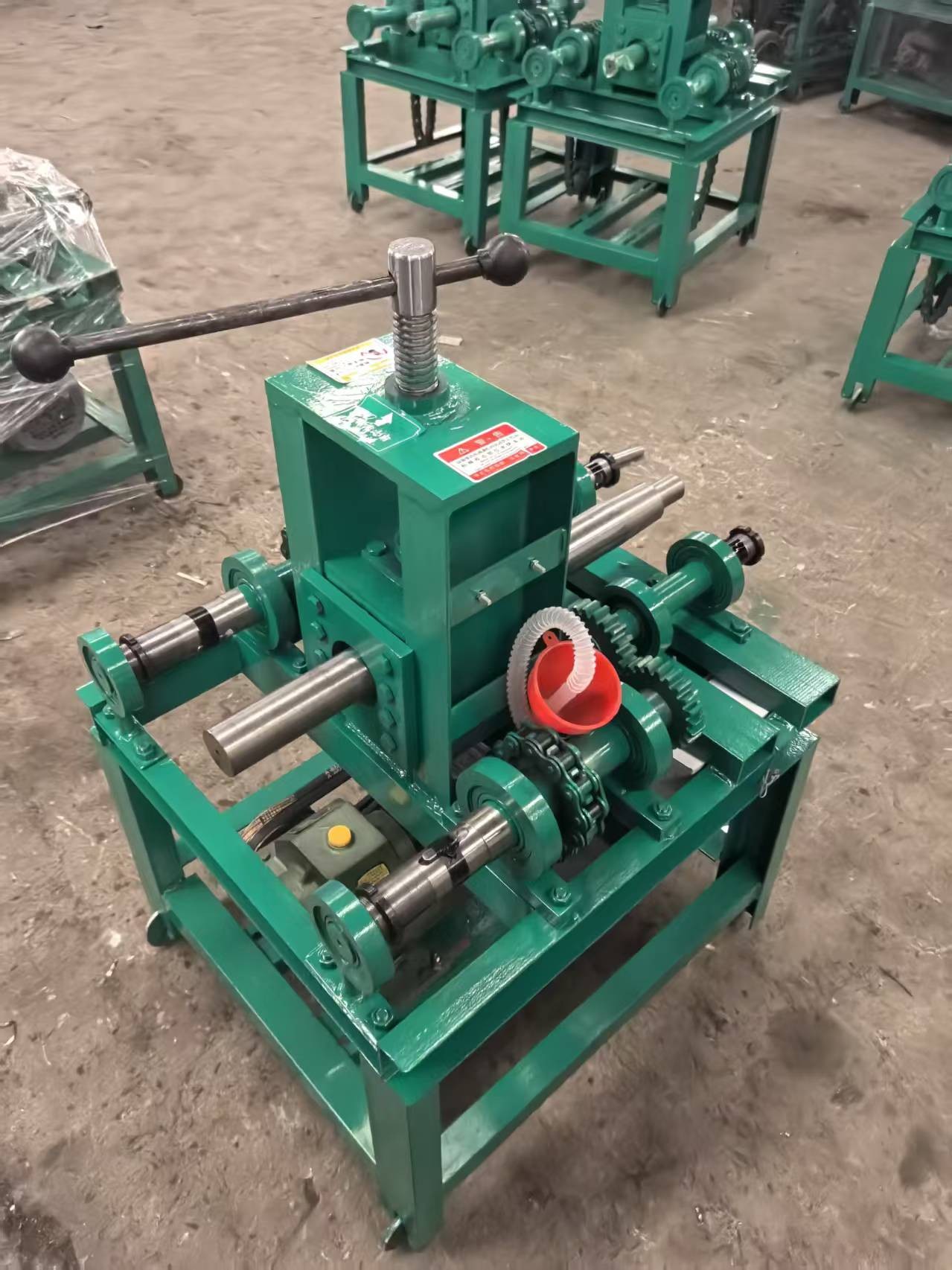
Practical tip: If you hear creaking or feel sudden resistance changes while bending, stop immediately. That’s the pipe telling you it’s about to buckle. Back off the pressure, check your setup, and resume more slowly.
Method 3: Provide Internal Support
When you’re bending thin-walled pipe (wall thickness less than 2 mm for medium diameters), the pipe walls simply can’t support themselves against compressive forces. You need to give them something to push against from the inside. Three common methods work:
Sand filling: Pack the pipe tightly with fine, dry sand and cap both ends. The sand acts as an incompressible internal support that prevents walls from collapsing inward. It’s the cheapest method for one-off jobs — just make sure the sand is completely dry, or moisture turns it into mud that compresses and defeats the purpose.
Internal springs: A spring wound to match the pipe’s inner diameter slides inside before bending and springs back out after. Springs work for small-diameter, thin-walled pipes with moderate bend angles, but provide limited support for tight radii.
Mandrel (芯棒): A solid or linked internal support that stays positioned at the bend point throughout the bending process. This is the professional solution for thin-walled, tight-radius bends. CNC benders equipped with mandrels can produce kink-free bends on pipes that would otherwise collapse instantly. For production work with thin-wall tubing, a mandrel-equipped machine isn’t optional — it’s essential.
Method 4: Respect the Minimum Bend Radius
Every pipe has a minimum bend radius below which it will kink — no matter what else you do right. The general rule of thumb:
Minimum bend radius ≈ 3 × pipe outer diameter
So for a φ50 mm pipe, your bend radius should be at least 150 mm. Go tighter than that, and the outer wall thins beyond recovery while the inner wall compresses past its buckling point.
This is where vertical pipe benders have a structural advantage. Their three-roller design inherently produces large-radius arcs — the pipe curves gradually over a long contact area rather than folding sharply at a single die point. For greenhouse frames, guardrails, and architectural arches, this large-radius characteristic means kinking is rarely an issue on a vertical bender.
CNC platform benders can produce sharp 90° and 180° bends — but they need mandrels, precise die matching, and correct settings to prevent kinking at those tight radii. The tighter the bend, the more support you need.
Bottom line: If your application allows a large bend radius, use it. It costs nothing and eliminates most problems before they start.
Method 5: Prepare the Material Properly
The condition of the pipe before bending matters as much as the bending process. Three material factors affect kinking:
Work hardening: Steel and especially stainless steel harden as they deform. If the pipe has already been cold-worked (cut, flattened, or partially bent and straightened), the hardened areas become brittle and prone to kinking. Inspect pipes for prior deformation before loading them.
Annealing: For harder materials or work-hardened pipes, annealing — heating the metal to a specific temperature and letting it cool slowly — restores ductility. This is critical for stainless steel, which work-hardens aggressively. A work-hardened stainless pipe can kink at a radius that the same pipe in annealed condition handles easily.
Surface condition: Burrs, dents, and rust pits all create stress concentrators. A pipe with a dent on the inner bend radius will kink at that point. Deburr cut ends, inspect for damage, and reject pipes with visible defects in the bend area.
Method 6: Choose the Right Wall Thickness
Wall thickness is the single biggest material factor in kink resistance. Thicker walls mean more material in the compression zone to resist buckling.
The ratio that matters: Wall thickness ÷ outer diameter (t/D ratio). When this ratio is ≥ 0.1, the pipe is generally safe from kinking under normal bending conditions. Below 0.05, you need internal support.
Common pipe schedules illustrate this well:
| Pipe Type | Typical t/D Ratio | Kinking Risk |
|---|---|---|
| Schedule 40 (φ25 mm) | ~0.14 | Low |
| Schedule 10 (φ25 mm) | ~0.07 | Moderate |
| Thin-wall (φ25 × 1.0 mm) | ~0.04 | High |
Schedule 40 pipe bends reliably without special support. Schedule 10 requires careful technique. Thin-wall decorative tubing needs mandrels or sand filling — no exceptions. If your project allows a choice, always err on the thicker side.
Method 7: Match the Machine to the Job
Using the wrong type of bender for your pipe is a guaranteed path to kinking. Each machine type has a sweet spot:
- Manual hand bender: thin-wall, small OD (≤25 mm), gentle bends — low kinking risk when used correctly
- Vertical electric bender: medium wall, large-radius arcs — very low risk due to large radius + smooth motor drive
- CNC with mandrel: thin-wall, tight-radius, batch production — low risk with mandrel support
- CNC without mandrel: medium-to-thick wall, precise angles — moderate risk
The TubeFab vertical 76-type (2.2 KW, 135 kg, round pipe φ19–76 mm, square tube 20–60 mm, max capacity φ76 × 1.5 mm) sits in the sweet spot for most fabrication shops. Its large-radius arc bending naturally reduces kinking risk, while the electric motor provides smooth, consistent force that manual benders can’t match.
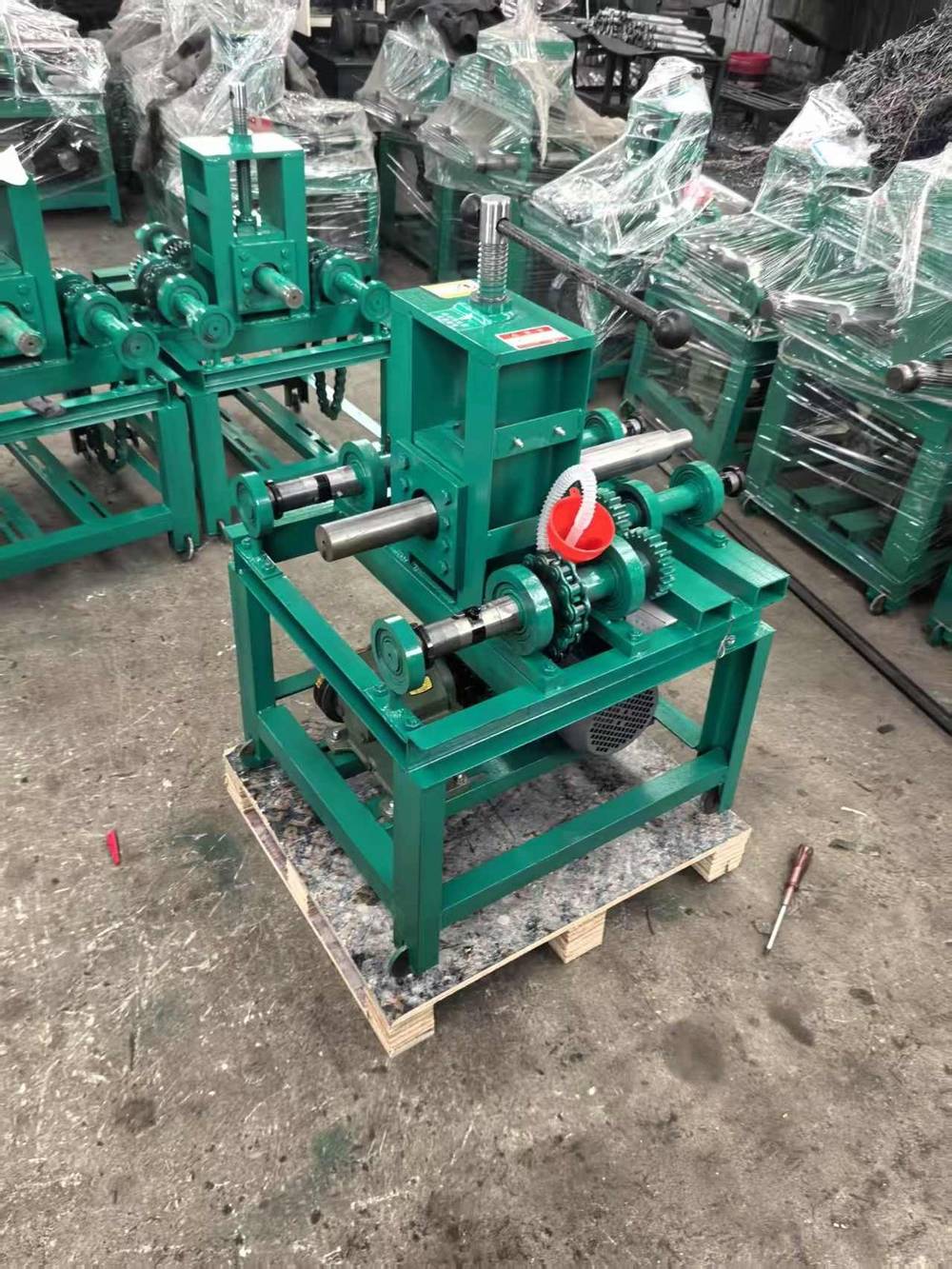
For thin-wall, tight-radius work, a CNC bender with mandrel support is the right choice. For everything else — greenhouse frames, fence arches, structural curves — the vertical bender handles it kink-free.
Not sure which machine type fits your work? Our vertical pipe bender buying guide walks through the decision in detail. You can also compare electric vs. hydraulic benders for more options.
Common Kinking Problems: Quick Diagnosis Table
In real shop conditions, kinking doesn’t always happen for obvious reasons. Here’s a field-tested diagnostic table:
| Problem | Likely Cause | Solution |
|---|---|---|
| Pipe kinks at start of bend | Die too loose or pipe not seated properly | Re-check die size; ensure pipe is fully seated in groove |
| Pipe kinks mid-bend | Force applied too quickly | Reduce bending speed; use motor-driven bender |
| Outer wall tears | Bend radius too tight for wall thickness | Increase radius or switch to thicker wall |
| Inner wall wrinkles | Compression overload, no internal support | Add mandrel or sand filling |
| Pipe flattens (oval shape) | Die too large or missing pressure die | Use correctly sized die; add wiper die |
| Inconsistent results between pipes | Material hardness varies between batches | Anneal pipes; standardize material source |
| Kinking only on stainless steel | Work hardening during bend | Anneal before bending; bend more slowly |
| Square tube twists during bend | Incorrect die for square profile | Use dedicated square tube die set |
Material Kinking Risk Comparison
Not all materials behave the same way under bending stress. Here’s how common pipe materials rank by kinking risk:
| Material | Risk | Notes |
|---|---|---|
| Carbon steel | Low | Good ductility; no special prep needed |
| Galvanized steel | Moderate | Zinc coating may crack; bend slowly |
| Stainless steel | Moderate–High | Work-hardens rapidly; anneal before bending |
| Aluminum | High | Low ductility; anneal (T0), use mandrel |
| Copper (annealed) | Low | Very ductile; bends easily |
| Copper (hard-drawn) | Moderate | Anneal before bending or use annealed stock |
Carbon steel is the most forgiving material for bending. For stainless or aluminum, budget extra time for material preparation and use more conservative bend radii.
Conclusion
Preventing pipe kinking isn’t rocket science — it’s about respecting the physics of bending metal. Match your die to the pipe, apply force smoothly, support thin walls from inside, keep your bend radius generous, prepare your material, choose adequate wall thickness, and use the right machine for the job.
The vertical electric pipe bender’s large-radius arc bending gives it a natural edge — the gentle, sweeping curves it produces are inherently resistant to kinking. Combined with precision-matched die sets and smooth motor-driven force control, it handles the majority of fabrication needs without the complications of tight-radius bending.
Looking for a pipe bender that minimizes kinking? TubeFab’s vertical electric benders feature precision-matched die sets and smooth motor-driven bending. The 76-type handles round pipe from φ19–76 mm and square tube from 20–60 mm, with a complete die set included. Contact us for specs, pricing, and recommendations for your specific bending needs.
TubeFab manufactures pipe bending equipment for fabricators worldwide. We help you choose the right machine, dies, and bending technique for kink-free results. Reach out anytime with your pipe specs and bending requirements.