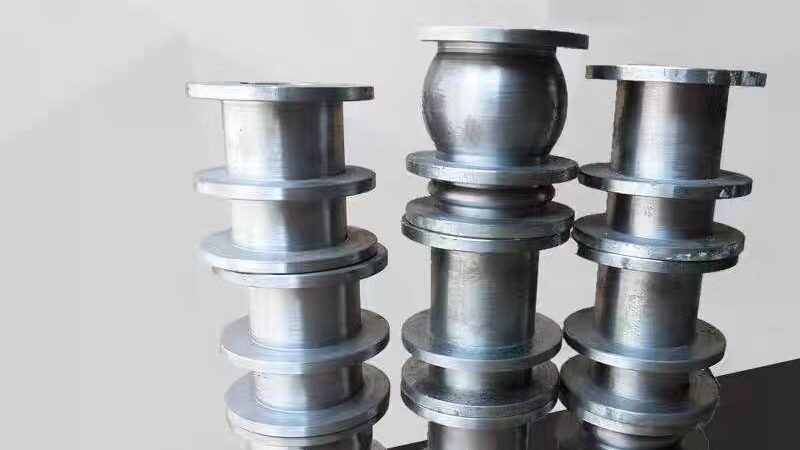
Selecting the right pipe bending machine requires looking beyond maximum pipe diameter. The true assessment lies in evaluating spatial constraints, electrical infrastructure, material yield strengths, and daily production volumes. Many fabricators purchase oversized equipment that wastes floor space or underpowered units that fail on high-strength alloys. This comprehensive engineering guide will walk you through the exact technical metrics and practical calculations needed to determine if a specific pipe bender aligns with your workshop’s operational reality, ensuring maximum return on investment and production efficiency.
Understanding Workshop Integration and Machine Compatibility
Integrating a new pipe bending machine into an existing fabrication facility involves much more than matching the machine’s capacity to your largest pipe diameter. Workshop compatibility dictates the overall workflow efficiency, affecting material handling, operator ergonomics, and secondary finishing processes. When engineers evaluate equipment, they must consider the physical footprint relative to available floor space, the electrical phase requirements, and the machine’s ability to maintain consistent tolerances under continuous daily operation. A machine that fits perfectly on paper might create severe bottlenecks if it requires excessive clearance for pipe loading or demands a three-phase power upgrade that exceeds the facility’s current electrical infrastructure.
The material flow within your shop floor is another critical factor that dictates machine suitability. If your workshop primarily handles long, continuous coils or standard 6-meter straight pipes, the machine’s feeding mechanism and rear clearance become paramount. Vertical electric benders, for instance, utilize gravity and a compact vertical plane, drastically reducing the required rear clearance compared to traditional horizontal hydraulic setups. This spatial efficiency allows fabricators to position the bender closer to the cutting station and the welding jig, minimizing the physical distance raw materials must travel between processing steps.
Furthermore, the compatibility of the machine with your specific material grades determines long-term viability. Bending high-carbon steel or stainless alloys requires significantly higher torque and rigid tooling compared to mild steel or aluminum. If your workshop frequently transitions between different material types, the machine must offer quick tooling changeovers and adjustable speed controls to prevent material cracking. Evaluating these integration factors holistically ensures that the selected equipment operates seamlessly within your existing production ecosystem, rather than forcing the entire workshop to adapt to the machine’s limitations.
Key Technical Considerations for Machine Selection
The fundamental technical consideration revolves around the relationship between material yield strength, wall thickness, and the minimum bend radius. According to ASTM A53 standards for seamless and welded black and hot-dipped galvanized steel, the yield strength can vary significantly based on the grade and manufacturing process. When bending Schedule 40 pipe, the outer fibers experience tensile stress while the inner fibers undergo compression. The machine must generate sufficient torque to exceed the material’s yield point without exceeding its ultimate tensile strength, which would cause catastrophic cracking and structural failure.
Spatial Footprint and Power Requirements
Floor space is a premium asset in any manufacturing environment. Traditional horizontal benders often require extensive rear clearance for the pipe to swing during the bending process. In contrast, vertical designs utilize a rotating arm or vertical die movement, saving up to 60% of floor space. Additionally, electrical infrastructure must be verified. While smaller electric models operate on standard single-phase 220V power, larger CNC or hydraulic platforms often require three-phase 380V or 415V power. Upgrading facility electrical panels can add thousands of dollars to the total project cost, making power-compatible models highly advantageous. For more insights on facility setup, see our guide on how to choose a vertical pipe bending machine.
Tolerance and Angle Accuracy Standards
Precision is non-negotiable in structural and architectural fabrication. Industry standards such as ANSI B31.3 for process piping dictate strict tolerances for dimensional accuracy and angular deviation. A machine capable of holding a ±0.5° angle accuracy is essential for batch production where multiple components must weld together seamlessly. Closed-loop encoder systems continuously monitor the bend angle and automatically compensate for minor hydraulic or mechanical drift, ensuring that the 90th bend matches the 1st bend perfectly. This level of precision eliminates the need for secondary manual adjustments and reduces scrap rates.
Tooling Material and Mandrel Support
The hardness of the bending dies must exceed the hardness of the pipe material to prevent tooling wear and surface galling. For thin-walled tubes or tight radius bends, the inclusion of an internal mandrel and wiper die is mandatory to prevent wall thinning and ovality. The machine must be mechanically capable of extracting the mandrel smoothly after the bend cycle without damaging the inner pipe surface. Evaluating the machine’s mandrel-pulling mechanism and tooling material quality is just as important as evaluating the main drive motor’s power output.
Step-by-Step Assessment Guide and Method Comparison
To systematically assess if a pipe bending machine fits your workshop, begin by documenting your maximum and minimum pipe dimensions, including outer diameter, wall thickness, and material grade. Next, measure the available floor space, specifically noting the height clearance and the distance from the power source. Compare these physical constraints against the machine’s technical specifications, paying close attention to the bending torque and the required electrical phase. Finally, calculate your daily production volume to determine if a manual or semi-automatic electric model suffices, or if a fully automated CNC platform is required for batch consistency. You can also explore our electric vs hydraulic pipe bender comparison for further context.
When comparing different drive mechanisms, it is crucial to align the machine’s capabilities with your specific production demands. Electric benders offer excellent precision and energy efficiency for small to medium batches, while hydraulic systems provide the raw brute force necessary for thick-walled, large-diameter structural pipes. CNC platforms bridge the gap by offering programmable multi-axis control for complex, multi-bend geometries. Understanding these fundamental differences prevents over-investing in unnecessary automation or under-investing in required torque, ensuring your workshop operates at peak mechanical efficiency without unnecessary capital expenditure.
The following comprehensive table provides a detailed technical comparison of the three primary bending methods to assist in your workshop assessment. This data highlights the operational boundaries, maintenance requirements, and ideal use cases for each technology. By analyzing these specific metrics, you can confidently select a system that perfectly matches your facility’s output requirements, spatial limitations, and long-term fabrication goals, ultimately maximizing your return on investment. This ensures optimal workflow integration.
| Feature | Vertical Electric Bender | CNC Platform Bender | Hydraulic Manual Bender |
|---|---|---|---|
| Max Pipe OD | 76mm (Model 76) | 120mm+ (Custom) | 114mm (Heavy Duty) |
| Angle Accuracy | ±1.0° (Digital Display) | ±0.5° (Closed-loop) | ±2.0° (Manual Gauge) |
| Floor Space Req. | Low (Vertical footprint) | High (Horizontal swing) | Medium (Horizontal swing) |
| Power Requirement | Single Phase 220V | Three Phase 380V | Manual / Electric Pump |
| Ideal Batch Size | 50 – 500 pieces/day | 500 – 5000 pieces/day | 1 – 50 pieces/day |
| Mandrel Capability | No (Standard models) | Yes (Optional add-on) | No (Standard models) |
| Setup Time | < 5 Minutes | 15 – 30 Minutes | < 2 Minutes |
| Maintenance Cost | Low (Grease/Motor) | Medium (Servo/Sensors) | High (Hydraulic seals) |
Real Customer Case Study: Greenhouse Hoop Fabrication
A mid-sized agricultural equipment manufacturer in South America needed to upgrade their greenhouse framing production line. Their primary requirement was bending galvanized steel pipes, specifically ASTM A53 Grade A, with an outer diameter of 25.4mm (1-inch NPS) and a wall thickness of 2.0mm. The application involved creating continuous 180° U-bends and 90° arches for a 600-square-meter vegetable greenhouse structure. The required bend radius was strictly set at 3×OD, resulting in a 76.2mm centerline radius (CLR). Their initial manual benders were causing severe ovality and inconsistent angles, leading to structural weakness and assembly delays on the installation site.
After a thorough workshop assessment, they selected the tubefabtech Model 63 vertical electric pipe bender. This model was chosen because its vertical design saved 60% of floor space, allowing them to integrate the bender directly between their pipe cutting saw and the welding jig. The production target was 200 hoops per day, requiring a machine that could handle continuous operation without overheating. The budget for the equipment was strictly capped between $800 and $1,200, making the Model 63 the perfect financial fit compared to Western brands that quoted over $3,000 for similar capacity.
During the initial trials, they encountered a common problem: 3° of springback on the galvanized steel, causing the 90° bends to fall short. The solution involved utilizing the machine’s digital encoder display to overbend the pipe by exactly 3.2°, compensating for the material’s elastic recovery. Additionally, at the tight 76.2mm CLR, they noticed a 4% ovality on the outer wall. By installing an optional internal plug mandrel and applying a specialized synthetic lubricant, they reduced the ovality to below 1.5%, ensuring perfect structural integrity. The operating cost settled at approximately $0.50 per bend, achieving a rapid return on investment.
Common Mistakes and How to Avoid Them
One of the most frequent mistakes fabricators make is ignoring the material’s springback characteristics. High-strength steels and stainless alloys exhibit significant elastic recovery after the bending pressure is released. To prevent dimensional inaccuracies, operators must calculate the springback factor and program the machine to overbend the pipe by 2° to 4°, depending on the material grade and wall thickness. Failing to compensate for springback results in parts that do not fit into the welding jigs, generating massive amounts of scrap and delaying project timelines.
Another critical error is selecting a machine without considering the minimum bend radius relative to the pipe diameter. Attempting to bend thin-walled tubing below the recommended 2.5×OD or 3×OD radius without internal support will inevitably cause the pipe wall to collapse, wrinkle, or kink. To avoid this, always verify the machine’s tooling compatibility and utilize an internal mandrel or a sand-filling technique for tight radii. For more detailed techniques on maintaining pipe integrity, refer to our guide on how to prevent pipe kinking when bending.
Fabricators also frequently overlook the electrical infrastructure requirements before purchasing heavy machinery. Ordering a high-tonnage CNC bender that requires three-phase 400V power, only to discover the workshop only supplies single-phase 220V, leads to expensive panel upgrades and project delays. Always conduct a comprehensive electrical audit of your facility before finalizing the machine specification. If three-phase power is unavailable, opt for advanced vertical electric models that utilize high-torque servo motors designed to operate efficiently on standard single-phase commercial power supplies.
Product Recommendations for Specific Workshop Needs
Based on extensive workshop assessments across global fabrication facilities, we recommend matching your specific production volume and spatial constraints to our targeted product lines. For small workshops, furniture makers, and greenhouse builders operating with limited floor space and single-phase power, our Vertical Electric Pipe Benders are the optimal choice. The Model 38 handles pipes up to 38mm OD, the Model 63 covers up to 63mm OD, and the Model 76 manages heavy-duty applications up to 76mm OD. These machines offer exceptional value, priced between $365 and $1,200, delivering 30-50% cost savings compared to Western equivalents while maintaining CE certification and global shipping capabilities.
For high-volume production environments, architectural metalworking, and automotive exhaust fabrication requiring complex multi-bend geometries and strict angular tolerances, our CNC Platform Pipe Benders are essential. Equipped with closed-loop encoder digital displays and multi-axis control, these machines guarantee ±0.5° angle accuracy. The mandrel-ready options ensure flawless bends on thin-walled stainless steel and aluminum. Priced between $5,800 and $14,000, they represent a long-term investment in precision and automation. To understand the operational differences between these systems, review our detailed comparison of vertical vs CNC pipe bending machines.
The following table summarizes the core specifications and pricing for our primary electric and CNC models, aiding your final workshop assessment. By reviewing these exact parameters, fabricators can quickly identify which machine aligns with their specific pipe dimensions, production volume, and financial constraints. This direct comparison eliminates guesswork and accelerates the procurement process for your workshop, ensuring that the selected equipment delivers immediate operational value. This guarantees a perfect fit.
| Model / Series | Max Pipe OD | Drive Type | Angle Accuracy | Key Feature | Price Range (USD) |
|---|---|---|---|---|---|
| Model 38 Vertical | 38mm | Electric Motor | ±1.0° | Compact, 220V Single Phase | $365 – $450 |
| Model 63 Vertical | 63mm | Electric Motor | ±1.0° | High Torque, Space Saving | $650 – $850 |
| Model 76 Vertical | 76mm | Electric Motor | ±1.0° | Heavy Duty, Mandrel Ready | $950 – $1,200 |
| CNC Platform 2-Axis | 63mm | Servo Motor | ±0.5° | Digital Display, Batch Memory | $5,800 – $7,500 |
| CNC Platform 4-Axis | 114mm | Servo Motor | ±0.5° | Multi-Axis, Auto Mandrel | $9,000 – $14,000 |
Frequently Asked Questions
Can a vertical electric bender handle thick-walled structural pipes?
Vertical electric benders are engineered primarily for mild steel, galvanized steel, and aluminum up to Schedule 40 wall thicknesses. For heavy-wall structural pipes exceeding 6mm thickness or high-tensile alloys, the torque generated by standard electric motors may be insufficient. In such cases, a hydraulic or CNC platform bender with a dedicated high-pressure pump is required to prevent motor stall and ensure a smooth bend without cracking the outer fiber.
How much floor space does a vertical bender actually save?
Traditional horizontal benders require significant rear clearance to accommodate the swinging motion of the pipe during the bending cycle. Vertical electric benders utilize a rotating die mechanism within a confined vertical plane. This design eliminates the need for rear swing clearance, effectively saving up to 60% of floor space. This compact footprint allows fabricators to integrate the bender directly into tight production cells or small workshop environments without disrupting material flow.
What is the typical delivery time for international orders?
We maintain robust inventory levels for our standard vertical and CNC models to support our global client base. Upon order confirmation and payment receipt, standard machines are typically dispatched within 3 to 5 business days. Global shipping via sea freight or express courier generally takes 12 to 18 days to reach major ports in North America, Europe, and Australia. All products are fully CE certified and packed in reinforced wooden crates for secure transit.
Do CNC machines require specialized programming knowledge?
Modern CNC pipe benders feature intuitive touch-screen interfaces that simplify the programming process. Operators input the pipe dimensions, bend angles, and feed lengths, and the machine automatically calculates the required axis movements. While basic G-code knowledge is beneficial for complex custom geometries, the conversational programming mode allows standard operators to set up new batch jobs in under five minutes. Comprehensive video tutorials and remote technical support are provided to ensure a smooth learning curve.
Get a Custom Quote for Your Workshop
Assessing if a pipe bending machine is suitable for your workshop is a critical engineering decision that impacts your profitability and production flow. To receive a precise, tailored recommendation and an accurate cost estimate, our technical team needs to understand your specific operational parameters. Please contact us with your detailed requirements, including the exact pipe material grade, outer diameter, wall thickness, desired bend radius, and your anticipated daily batch size.
Providing this data allows our engineers to verify the torque requirements, recommend the optimal tooling configuration, and confirm the electrical compatibility with your facility. Whether you need a compact Model 63 for greenhouse hoops or a 4-axis CNC platform for architectural handrails, we offer OEM/ODM customization to fit your exact needs. Reach out today to secure competitive pricing, verify global shipping timelines, and equip your workshop with the right bending technology.