Hydraulic vs CNC Pipe Bending Machine: Which One Do You Really Need?
Short answer: If you bend thick-wall steel pipe (≥2mm wall) in small-to-medium batches and your tolerance is ±1°, a hydraulic pipe bender at $2,500–$4,500 FOB is all the machine you need. If you’re running high-volume production with multi-radius compound bends at ±0.1° tolerance, a CNC pipe bending machine—typically $35,000 and up—is the correct investment. The mistake most workshop owners make isn’t choosing the wrong machine; it’s over-buying a CNC when a $3,500 hydraulic unit covers 80% of their daily jobs.
I’ve spent years watching fabricators agonize over this decision. Some drop $60,000 on a CNC bender they use twice a week. Others fight a manual bender on 5mm-wall stainless steel when a hydraulic unit would have paid for itself in the first month. Let me break down exactly where each technology shines—and where it doesn’t—so you can make the call with your eyes wide open.
The Core Difference: Hydraulic Muscle vs Digital Brains
A hydraulic pipe bender uses a hydraulic pump system to deliver continuous, steady bending force to the pipe. There’s no servo motor calculating angles in real time, no encoder feeding position data back to a controller. You step on the pedal, hydraulic oil pressurizes the ram, and the pipe bends. Simple, direct, relentless.
A CNC pipe bending machine replaces that simplicity with precision. Encoders track the bend angle to ±0.1°, a digital display shows you exactly where you are in the cycle, and programmable routines let you repeat the same complex bend sequence hundreds of times without drift.
Both approaches work. They just solve different problems.
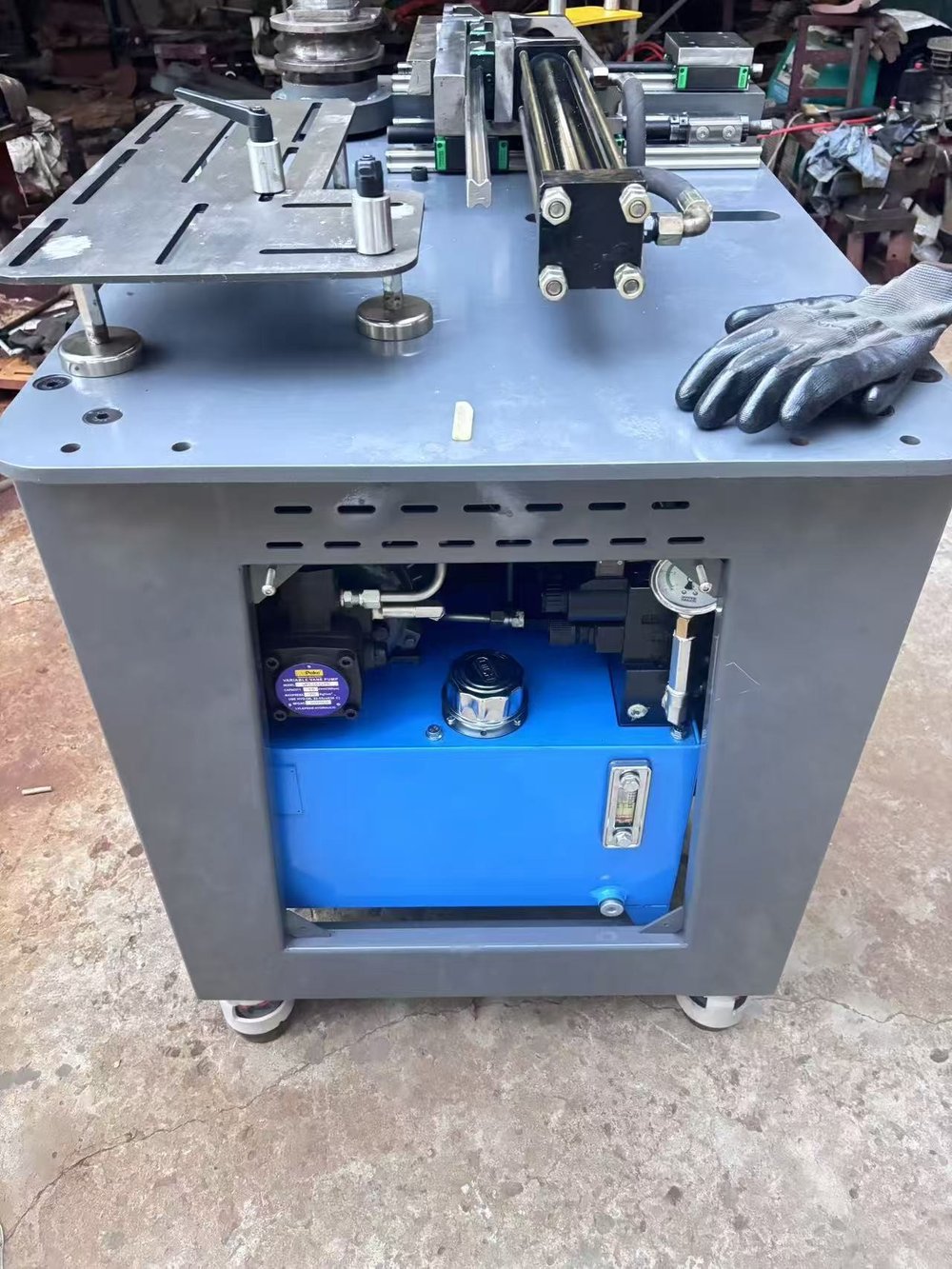
Where Hydraulic Benders Win (And It’s More Often Than You Think)
1. Thick-Wall Pipe? Hydraulic Is the Only Realistic Answer
Here’s something the CNC sales reps won’t tell you: for thick-wall carbon steel, stainless steel, and structural tubing, a hydraulic bender isn’t just “good enough”—it’s often the better tool.
Hydraulic systems deliver sustained tonnage without the thermal throttling that plagues electric servomotors. When you’re bending a 76mm OD steel pipe with 3mm wall thickness, the resistance is enormous. An electric bender’s motor heats up, torque drops, and you’re waiting for it to cool down. A hydraulic pump? It just keeps pushing. The oil doesn’t care if it’s the first bend or the fiftieth.
I’ve seen shops try to bend 4mm-wall stainless on a mid-range electric bender and literally burn out the motor. Same job on an HB-76 hydraulic unit? Done in 30 seconds, machine barely warm.
2. Price-to-Performance Ratio Is Undeniable
Let’s put the numbers on the table:
| Specification | Hydraulic (HB Series) | CNC |
|---|---|---|
| Price Range | $2,500 – $4,500 FOB | $35,000 – $300,000+ |
| Bend Accuracy | ±1° | ±0.1° |
| Max Wall Thickness | Up to 3mm (steel) | Varies by model |
| Max Pipe OD | 38mm / 63mm / 76mm | Typically 50–150mm+ |
| Learning Curve | 2–4 hours | Days to weeks |
| Maintenance | Oil changes, seal replacement | Servo calibration, encoder checks, software updates |
| Bend Angle Range | 0–180° | 0–190°+ (programmable) |
| Portability | Yes (caster wheels) | No (fixed installation) |
A CNC bender costs roughly 10–80x more than a hydraulic one. For a shop doing 20–200 bends per day on standard angles, that gap is impossible to justify on bending performance alone. You’re paying for repeatability and complexity you may never use.
If price is your primary constraint, check out our detailed pipe bender price guide for a full breakdown across machine types.
3. Simplicity Equals Reliability Equals Uptime
A hydraulic pipe bender has maybe 15 moving parts. A CNC bender has hundreds—including sensitive electronics that don’t love dust, heat, or voltage fluctuations.
In a real fabrication shop—where metal dust hangs in the air, temperatures swing between seasons, and the power supply isn’t always clean—a hydraulic bender just keeps working. No encoder to misalign. No servo to fault out. No software update that breaks your bend programs.
Maintenance on a hydraulic unit means changing the hydraulic oil every 6–12 months and occasionally replacing a seal ring. That’s it. Total annual maintenance cost: under $100 in materials. Compare that to a CNC bender where a single servo motor replacement can run $2,000–$5,000.
4. Material Versatility Without Setup Changes
Hydraulic benders handle carbon steel, stainless steel, aluminum, copper, and brass—all with the same machine and minimal tooling changes. You swap the die, adjust the pressure if needed, and bend.
CNC benders can handle the same materials, but each material change often requires reprogramming feed rates, springback compensation, and pressure settings. For a shop that switches between aluminum exhaust tubing and steel handrail pipe throughout the day, that setup overhead kills productivity.
5. Foot Pedal Operation = Hands-Free Safety
Both our hydraulic and CNC machines use foot pedal operation, but it serves different purposes. On the hydraulic bender, the foot pedal lets you keep both hands on the pipe—positioning it, guiding it, feeling the resistance. That tactile feedback is something experienced operators rely on heavily. You can feel when a pipe is about to buckle or when the bend is reaching the material’s limit.
On a CNC machine, the foot pedal is more of a start/stop trigger—the machine does the thinking. Which brings us to where CNC actually earns its price tag.
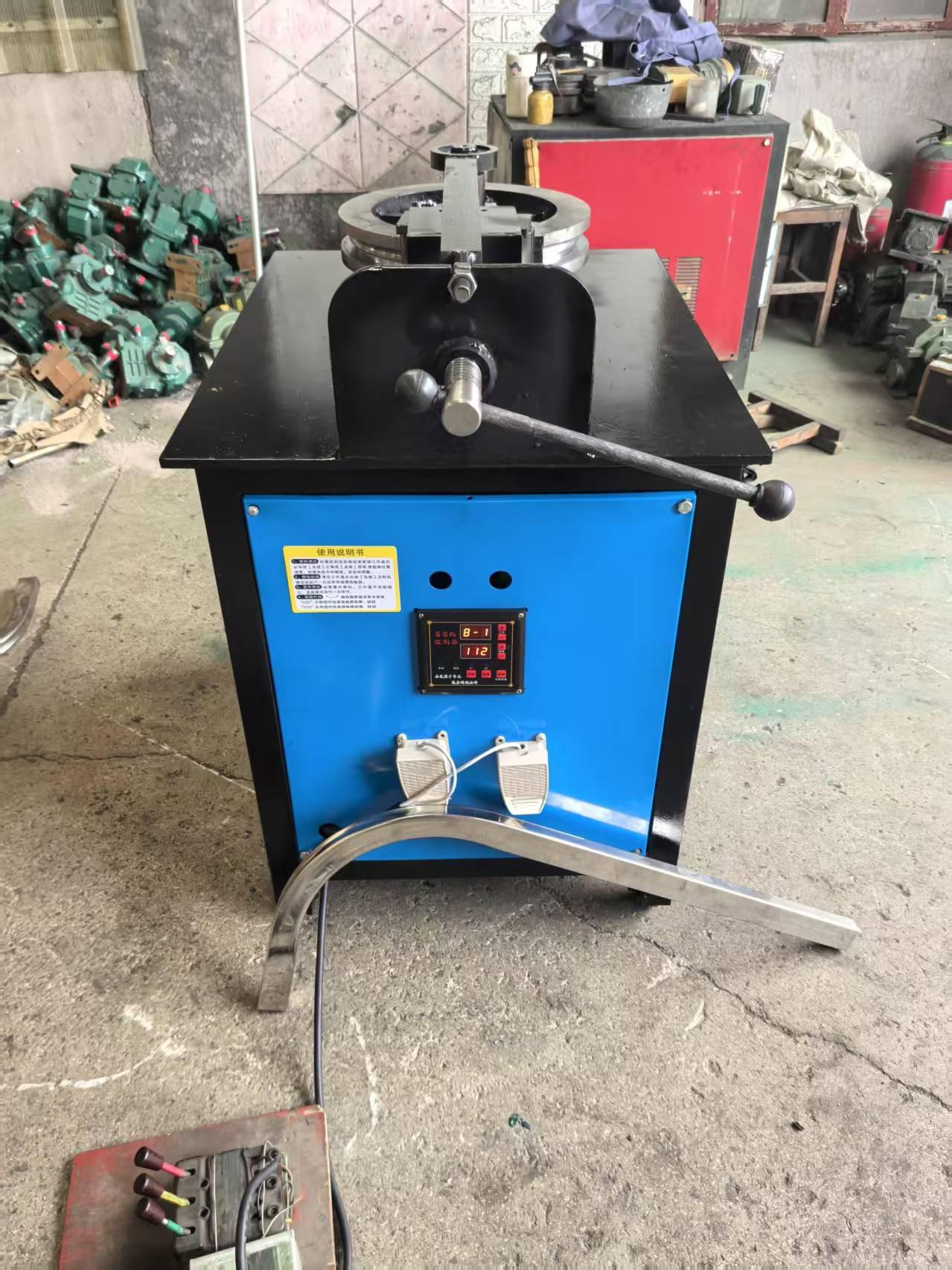
Where CNC Benders Genuinely Justify the Investment
High-Volume Production Runs
If you’re bending 500+ identical parts per shift—exhaust systems, furniture frames, roll cages—CNC is the right tool. The programmable repeatability means part #1 and part #500 come out identical. No operator fatigue, no drift, no rework.
A hydraulic bender can repeat bends well, but it depends on the operator’s consistency. After 8 hours and 400 bends, even a skilled operator’s accuracy drifts. CNC doesn’t get tired.
Multi-Radius Compound Bends
When a single part requires multiple bends at different radii and angles—think automotive exhaust with tight-radius bends flowing into gentle curves—a CNC bender handles the entire sequence in one setup. You program the bend sequence, load the pipe, and the machine executes the full routine.
On a hydraulic bender, each radius change means swapping tooling and manually measuring the next angle. It’s doable, but it’s slow and introduces variability.
Tight Tolerance Requirements
±0.1° vs ±1° doesn’t sound like much until you’re assembling a frame where two bent tubes need to meet at a welded joint. At ±1°, a 90° bend could come out at 89° or 91°—and on a 1-meter pipe, that’s a 17mm deviation at the end. For structural assemblies, that gap means rework or rejection.
For handrails, furniture, and general fabrication, ±1° is perfectly acceptable. For aerospace, automotive OEM, or precision frameworks, ±0.1° is non-negotiable.
Real-World Scenario: Which Machine for Which Shop?
Shop A — Custom Handrail Fabricator Bends 10–30 steel pipes per day, 38–63mm OD, 2–2.5mm wall, mostly 90° and 135° angles. Needs to move the machine between indoor and outdoor work sites.
→ Recommendation: HB-63 Hydraulic Pipe Bender ($3,500 FOB). Portable, powerful enough for the pipe sizes, simple enough that any worker can operate it after an hour of training. The caster wheels let them wheel it to wherever the project is.
Shop B — Exhaust System Manufacturer Bends 300+ tubes per shift, stainless and aluminized steel, multiple bend radii per part, tolerance spec of ±0.3°.
→ Recommendation: CNC Pipe Bending Machine. The compound bend sequences and production volume make CNC the only viable choice. The $35,000+ investment pays back through reduced rework and labor savings within 12–18 months.
Shop C — General Fabrication Workshop Mix of handrails, furniture frames, gate work, and occasional custom exhaust. Pipe sizes from 25mm to 76mm, batch sizes from 1 to 50.
→ Recommendation: HB-76 Hydraulic Pipe Bender ($4,500 FOB). The 76mm capacity covers their largest pipe, the hydraulic power handles thick-wall steel for gate work, and the simplicity means they can switch between jobs without reprogramming. If they later land a high-volume exhaust contract, they can add a CNC unit without replacing the hydraulic—the two machines complement each other perfectly.
This complementarity is worth emphasizing. A hydraulic bender and a CNC bender aren’t competitors in your shop—they’re teammates. The hydraulic handles the heavy, simple, one-off work. The CNC handles the precise, complex, repeatable work. Many well-equipped shops run both.
For a deeper look at how vertical and CNC machines compare in specific applications, see our vertical vs CNC pipe bending machine comparison.
The Hidden Costs Nobody Talks About
When comparing hydraulic vs CNC, the purchase price is only the beginning. Here’s what I’ve seen shops overlook:
CNC Hidden Costs: – Operator training: $500–$2,000 per person – Software licensing and updates: $200–$1,000/year – Specialized tooling for each bend radius: $300–$1,500 per set – Downtime when the controller faults: hours to days waiting for a technician – Electrical requirements (3-phase power, clean voltage): installation costs vary
Hydraulic Hidden Costs: – Hydraulic oil replacement: ~$30–$50 every 6–12 months – Seal kit replacement: ~$20–$40 annually – That’s… basically it.
For a shop doing under 100 bends per day, the total cost of ownership over 5 years favors hydraulic by a margin of $40,000–$100,000+. That’s not a rounding error—it’s the difference between hiring another fabricator or not.
If you’re still weighing hydraulic against electric (non-CNC) options, our electric vs hydraulic pipe bender comparison covers that specific matchup in detail.
Making the Decision: A Simple Framework
Ask yourself these four questions:
- What’s my daily bend volume? Under 100 → hydraulic. Over 300 → CNC. In between → either could work, lean hydraulic if budget is tight.
- What’s my tolerance requirement? ±1° acceptable → hydraulic. Need ±0.3° or tighter → CNC.
- Do I need compound multi-radius bends? Yes, frequently → CNC. No, or rarely → hydraulic.
- What’s my budget? Under $10,000 → hydraulic is your only realistic option. Over $50,000 with high volume → CNC makes sense.
If you answered “hydraulic” to three or more questions, a hydraulic pipe bender is your machine. Don’t let anyone talk you into over-buying.
Our HB-38, HB-63, and HB-76 hydraulic benders cover pipe diameters from 38mm to 76mm with wall thicknesses up to 3mm. Every model features foot pedal operation, a 0–180° bend range, caster wheel mobility, and compatibility with steel, stainless, aluminum, copper, and brass. Prices start at $2,500 FOB.
For help choosing the right model for your specific pipe sizes and applications, our guide to choosing a vertical pipe bending machine walks through the selection process step by step.
The Bottom Line
The hydraulic pipe bending machine isn’t the “budget option” or the “entry-level choice”—it’s the right tool for a massive range of real-world fabrication work. It bends thick-wall steel that electric machines can’t touch. It costs a fraction of a CNC unit. It runs for decades with minimal maintenance. And in the hands of a skilled operator, it produces bends that are more than accurate enough for 90% of fabrication applications.
CNC earns its place when volume, complexity, and tolerance demands cross a specific threshold. If you’re not past that threshold, a hydraulic bender is the smarter business decision—full stop.
Talk to Us About Your Bending Requirements
Every shop’s needs are different. Tell us your pipe sizes, materials, daily volume, and tolerance requirements, and we’ll recommend the machine that actually fits your work—not the one with the biggest price tag.
Contact TubeFab Tech today for a quote on hydraulic pipe benders (HB-38/63/76) or to discuss whether a CNC upgrade makes sense for your operation. We ship worldwide with FOB pricing and respond to inquiries within 24 hours.