Vertical vs CNC Pipe Bending Machine: Which One Fits Your Work?
When you’re shopping for a pipe bending machine, you’ll quickly notice two popular types dominate the market: the vertical pipe bender and the CNC platform pipe bender. They look different, they work differently, and most importantly — they serve completely different bending needs.
Pick the wrong one, and you’ll either overspend on features you don’t need or end up with a machine that can’t do the job at all.
This guide breaks down exactly what each machine does best, so you can choose with confidence.
The Core Difference: Bending Radius and Angle Control
Here’s the fundamental distinction most buyers miss:
- Vertical pipe benders are built for large-radius bends. They excel at creating smooth, wide arcs across an entire length of pipe — think greenhouse frame curves, fence rail arcs, and structural arches.
- CNC pipe benders are built for precise-angle bends. They handle sharp 90° and 180° bends on larger-diameter round or square tubes with digital accuracy that a vertical bender simply can’t match.
In other words, these aren’t competing machines. They’re complementary tools for different jobs.
Vertical Pipe Bending Machine: The Large-Radius Specialist
What It Does Best
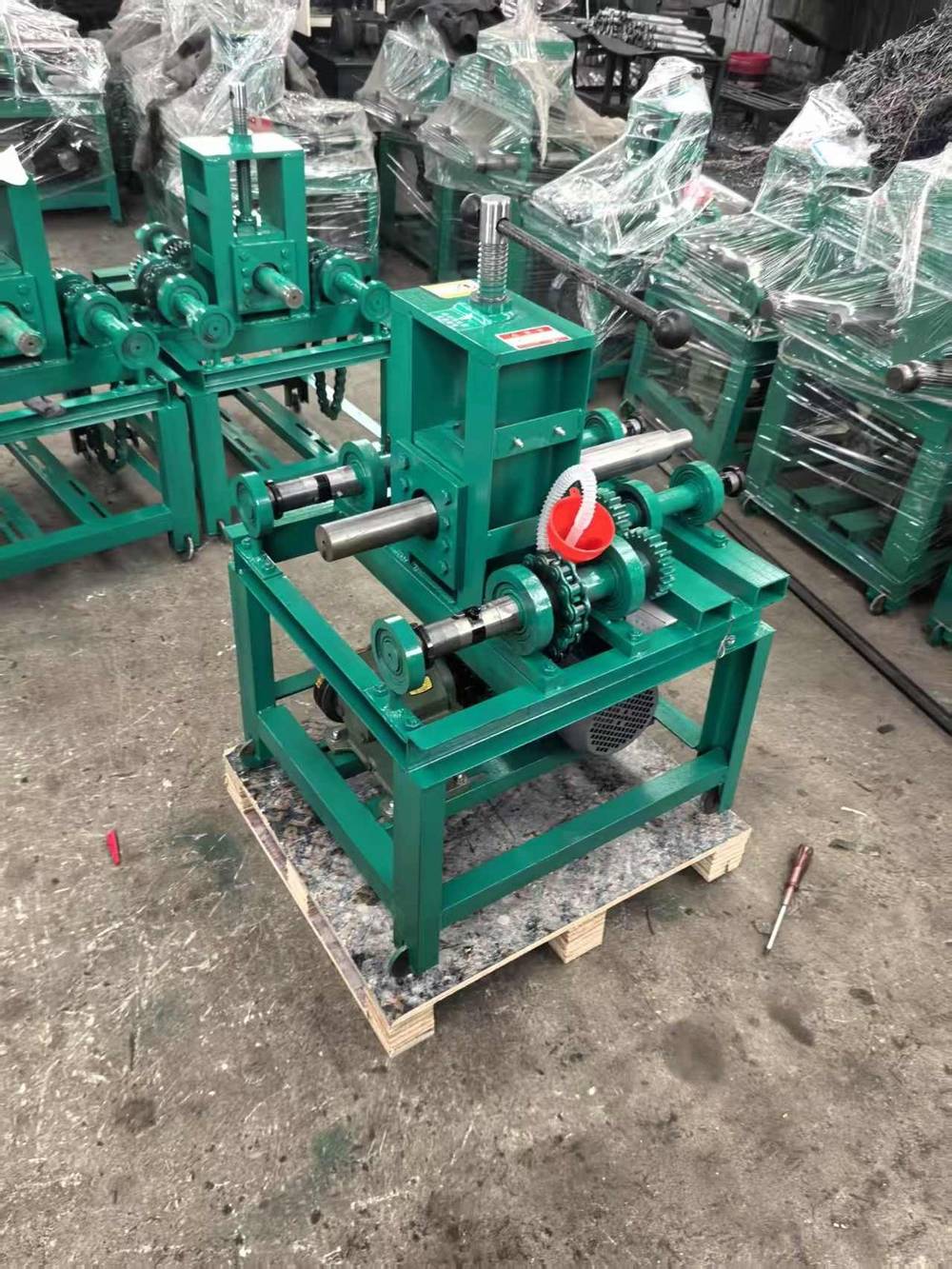
The vertical pipe bender uses a three-roller design with an electric motor driving chain-and-gear transmission. A hand-cranked lead screw adjusts the top roller’s downward pressure, letting you control the bend radius by how much pressure you apply.
This setup is ideal when you need:
- Whole-pipe bending — feed an entire length of pipe through the rollers and get a consistent curve
- Large bending radius — smooth, gradual arcs that don’t kink or flatten the pipe
- Repeatable arcs — once you set the roller pressure, every pipe comes out the same
Typical Applications
- Greenhouse and polytunnel frame construction
- Safety barrier and guardrail fabrication
- Decorative arches for gates and fences
- Any project requiring a gentle, sweeping curve rather than a sharp fold
Limitations
The vertical bender is not designed for sharp-angle bending. If you need a 90° right angle or a 180° U-bend on a thick-walled tube, this isn’t the right tool. The bending radius is inherently large — that’s by design, not a flaw.
Already know you need a vertical bender? Check out our complete vertical pipe bender buying guide for model specs and sizing.
CNC Pipe Bending Machine: Precision at Any Angle
What Makes It Different
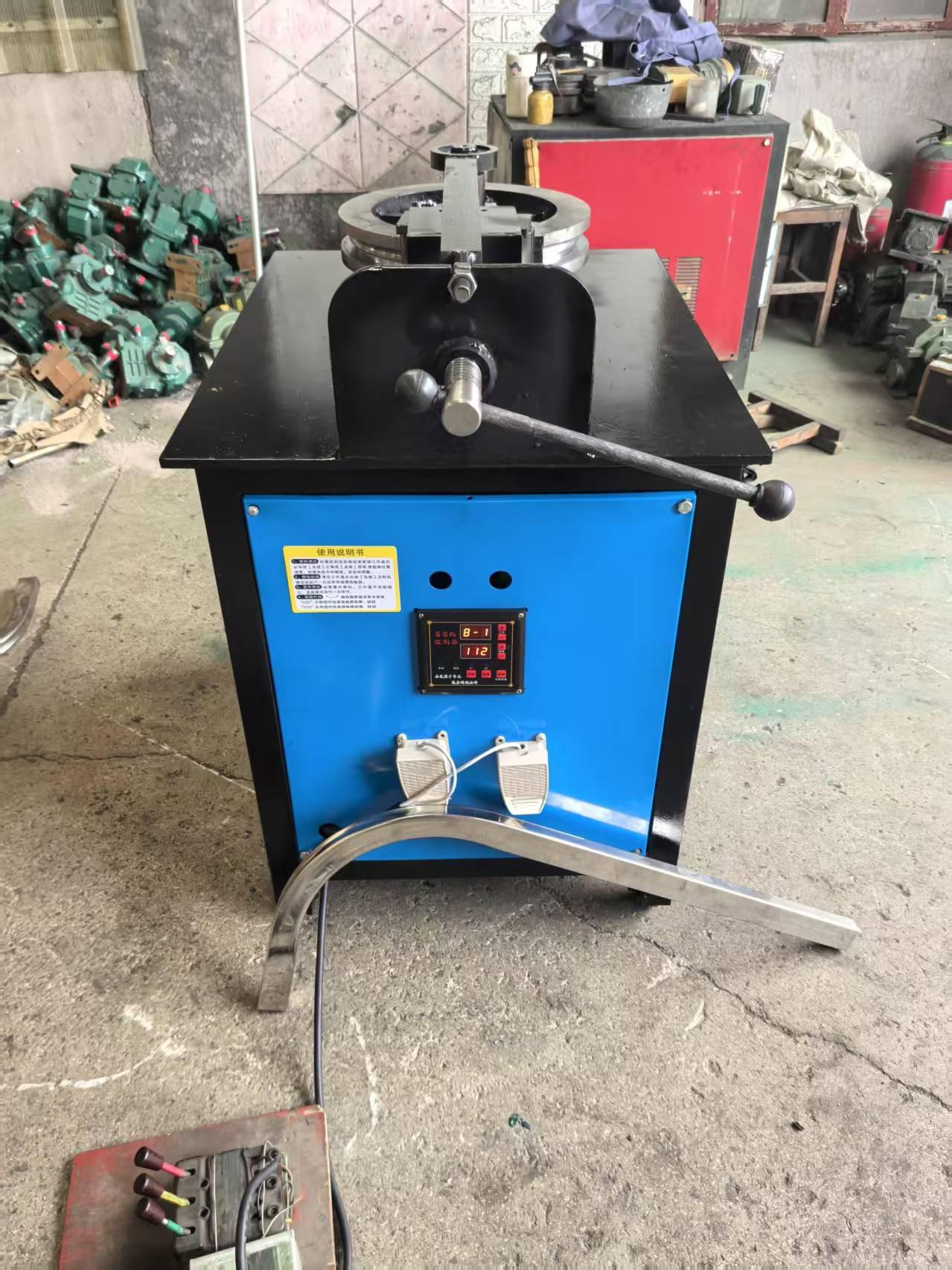
The CNC platform bender takes a completely different approach. Instead of rollers forming a gradual arc, it uses a rotating bending die powered by a motor with an encoder for precise angle feedback. A digital display panel shows the bending angle in real-time, and you can preset exact angles before each bend.
Key features include:
- Digital angle display — set the exact degree you want, and the machine stops automatically
- Encoder feedback — the encoder tracks the die’s rotation, ensuring the bend hits your preset angle every time
- Foot pedal operation — keeps both hands free for positioning the pipe
- Function buttons — program multiple bend angles for batch work
What It Does Best
- 90° and 180° bends — sharp, clean angles that a vertical roller bender can’t produce
- Larger tube sizes — handles bigger-diameter round tubes and square tubes that need more force
- Batch production — set the angle once, and every piece in the batch comes out identical
- Multi-angle jobs — program different angles for complex parts without re-measuring each time
Typical Applications
- Square tube frames requiring 90° corners
- Round pipe fittings with U-bends (180°)
- Furniture and rack manufacturing
- Construction brackets and structural connectors
- Any job where angle accuracy directly affects fit and assembly
Side-by-Side Comparison
| Feature | Vertical Pipe Bender | CNC Pipe Bender |
|---|---|---|
| Bending style | Large-radius arc | Precise-angle bend |
| Angle range | Wide arcs only | 0°–180° (programmable) |
| Best for | Whole pipes, gradual curves | Sharp corners, U-bends |
| Tube types | Round pipe (steel) | Round + square tube |
| Angle control | Manual (by feel) | Digital display + encoder |
| Operation | Hand-crank pressure | Foot pedal + button presets |
| Batch consistency | Good (with practice) | Excellent (programmed) |
| Typical use | Greenhouse frames, arches | Brackets, frames, fittings |
So, Which One Do You Need?
Choose the vertical pipe bender if: – You’re bending full-length pipes into arcs – Your work involves greenhouse construction, fencing, or architectural curves – You need large-radius bends, not sharp angles – Budget is a priority (vertical benders are more affordable)
Choose the CNC pipe bender if: – You need precise 90° or 180° bends – You’re working with larger-diameter round or square tubes – Batch consistency matters (every piece must be identical) – You want to set an angle and let the machine do the rest
Need both? That’s more common than you’d think. Many fabrication shops use a vertical bender for long arcs and a CNC bender for precise angle work. They handle completely different tasks, so having both gives you full bending capability.
Not sure which model fits your pipe sizes? Compare electric and hydraulic options to narrow down your choice further.
Conclusion
The vertical pipe bender and the CNC pipe bender aren’t competing products — they’re two halves of a complete pipe fabrication setup. One handles the curves, the other handles the corners. Understanding this distinction is the single most important factor in choosing the right machine for your work.
Still not sure which one fits your project? Send us your pipe specs (material, diameter, wall thickness, and bend angle needed), and we’ll recommend the right machine — at factory-direct pricing.
Have questions about pipe bending machines? We help buyers worldwide source the right equipment at competitive prices. Reach out anytime.