Why Pipe Bending Matters for Growing African Businesses
If you run a fabrication shop in Lagos, a furniture workshop in Kano, or a construction supply business in Accra, you already know that bent metal tubing is everywhere — in window frames, greenhouse structures, railings, irrigation systems, and furniture frames. The question isn’t whether you need a pipe bender. The question is: which type makes sense for your market?
After years of supplying bending equipment to clients across West and East Africa, we’ve seen what works and what fails. We’ve seen expensive CNC machines sitting idle because no one could program them, and we’ve seen simple manual benders still going strong after a decade of daily use. This guide walks you through everything you need to know to choose a simple pipe bender that will survive and thrive in Nigerian and broader African working conditions.
Whether you’re a first-time buyer upgrading from hand-bending or an established fabricator looking to add capacity, this article will help you make a decision you won’t regret.
Understanding the African Market Reality
Before comparing machines, let’s be honest about the operating environment in most African markets. Any equipment decision that ignores these realities is doomed to fail.
1. Electricity Is Unreliable
Nigeria’s grid operates at 230V/50Hz, but voltage fluctuations are common and severe. Power outages can last hours or even days, especially during the dry season when demand spikes. In many areas, businesses rely on generators as backup, but generator power can also be unstable. Any electric equipment you buy must tolerate voltage swings from 180V to 260V without burning out. Machines that require stable, clean power — like sophisticated CNC benders with sensitive electronic controllers — will struggle unless you invest heavily in voltage stabilizers, UPS systems, and backup generators. That’s additional cost and complexity most small businesses can’t afford.
2. Budgets Are Tight and Capital Is Scarce
Most small-to-medium fabricators in Africa work with limited capital and limited access to financing. Bank loans for equipment purchases carry high interest rates, and many entrepreneurs fund their businesses from personal savings or family contributions. Spending $15,000–$50,000 on a CNC pipe bender is simply not feasible for the majority of workshops. The sweet spot for most buyers is between $300 and $800 — a range where you get real bending capability, durability, and a reasonable return on investment without bankrupting your business. At this price point, a single machine can pay for itself within 2–3 months of regular work.
3. Maintenance and Repair Resources Are Limited
In Europe or North America, a manufacturer’s technician can be at your door in 24 hours. In many parts of Africa, finding a qualified repair technician for specialized industrial equipment can take weeks — if you can find one at all. Spare parts may need to be imported, adding cost and weeks of downtime. This means simplicity is not a luxury — it’s a survival strategy. The fewer complex components a machine has, the less can go wrong, and the easier it is to fix locally. A machine that a local welder or mechanic can troubleshoot with basic tools is worth far more than a high-tech machine that requires a factory-certified technician.
4. Logistics Take Time and Planning
Sea freight from China to Lagos or Tin Can Island typically takes 25–40 days. Add customs clearance, SONCAP inspection, and inland transport, and you’re looking at 6–8 weeks from order to delivery. You need equipment that is rugged enough to survive the journey, arrives ready to work, and doesn’t require complex installation or calibration on arrival.
Simple Pipe Bender vs. CNC Pipe Bender: Which Is Right for Africa?
This is the most common question we hear from African buyers. The appeal of CNC technology is understandable — precision, speed, repeatability. But context matters. Here’s a straight comparison:
| Factor | Simple/Manual Pipe Bender | CNC Pipe Bender |
|---|---|---|
| Price Range | $300–$800 | $15,000–$50,000+ |
| Power Requirement | Manual or 230V single-phase | 380V three-phase + stabilizer |
| Skill Level Needed | Basic — learnable in 1 day | Advanced programming required |
| Maintenance | Minimal — oil and clean | Regular calibration, software updates |
| Repair Difficulty | Easy — most parts replaceable locally | Hard — often needs imported parts |
| Production Speed | Moderate (60–100 bends/hour) | Fast (200+ bends/hour) |
| Setup Time | Minutes — no installation needed | Days — requires technician setup |
| Portability | Can move between sites | Fixed installation only |
| Best For | Small-to-medium workshops, on-site work | High-volume industrial production |
For 80% of African fabrication businesses, a simple pipe bender is the smarter investment. It gets the job done, costs a fraction of a CNC machine, and won’t leave you stranded when the power goes out or a circuit board fails. The remaining 20% — large-scale industrial manufacturers producing thousands of identical parts per day — may justify CNC, but even they often keep a manual bender as backup.
5 Key Factors When Choosing a Pipe Bender for Africa
1. Voltage Compatibility (230V/50Hz)
This is non-negotiable. Your machine must run on 230V single-phase, 50Hz power — the standard in Nigeria and most of Africa. Avoid machines designed only for 110V/60Hz (US standard) or 380V three-phase (industrial-only, requires special wiring). A dual-mode machine that works both manually and electrically is ideal: when the power is on, use the electric motor for speed and consistency; when it’s off, switch to manual operation and keep working. This flexibility is invaluable in markets where grid reliability is a daily gamble.
2. Ease of Operation
Your workers may not have formal technical training, and staff turnover can be high. Look for a bender with:
- Clear angle markings (0–180° or 0–120°) engraved on the frame — not stickers that fade
- Quick-change dies for different pipe sizes — no tools needed to swap
- Simple lever or pedal operation — one motion, one bend
- No software, no programming, no touchscreen to crack
A good simple bender should be operable by anyone after a 30-minute orientation. If it takes a week to train someone, it’s too complex for your market.
3. Low Maintenance Cost
Ask yourself: What will it cost to keep this machine running for 5 years? The best machines for Africa require nothing more than periodic lubrication of pivot points and wiping down after use. Avoid machines with hydraulic seals that need specialized replacement fluids, or electronic control boards that can’t be sourced locally. Ask the supplier: “What routine maintenance does this machine need, and can it all be done with basic tools?” If the answer involves calling a technician, keep looking.
4. Parts Interchangeability
Dies, rollers, and pins wear out over time — it’s normal. What matters is how easily you can replace them. Make sure your supplier uses standardized, replaceable components that can be shipped affordably via courier (DHL, FedEx) when needed. A machine that uses proprietary parts you can only get from one dealer is a liability in Africa — if that dealer goes out of business or stops supporting the model, your machine becomes scrap. Ask for a spare parts list and pricing before you buy.
5. Shipping Weight and Size
Freight cost is calculated by weight and volume. A compact, vertical-type bender weighing 50–80 kg is much cheaper to ship than a 300 kg industrial unit. Lighter machines are also easier to transport from the port to your workshop — important when road conditions are less than ideal and hiring a crane truck is expensive. Ask your supplier for the packed dimensions and weight before committing, so you can get an accurate freight quote.
Real-World Applications: What Nigerians Are Bending
Here are the most common pipe bending applications we see in the Nigerian and broader African market — and how a simple bender handles each one:
Greenhouse and Shade Structures
Agriculture is a growing sector across Africa, driven by food security concerns and government investment programs. Galvanized steel hoops for greenhouses, shade nets, and polytunnel frames require consistent curved bends — typically 180° arcs on pipe diameters of 20–32mm. A simple bender handles this perfectly, producing uniform hoops that ensure proper tension on the covering material. A single greenhouse may need 30–50 bent hoops, a job that takes a skilled operator about 2 hours on a manual bender.
Furniture Manufacturing
Metal furniture — chairs, tables, bed frames, display racks, shop fittings — is a booming industry in Nigeria, driven by urbanization and a growing middle class. These require precise bends at various angles on mild steel tubing (19–25mm). A manual or semi-automatic bender gives furniture makers the flexibility they need — different angles for different designs — without the overhead of CNC programming for each new product.
Construction Railings and Balustrades
Staircase railings, balcony balustrades, and security window bars all need bent pipe elements. On construction sites across Lagos, Abuja, and Port Harcourt, portable pipe benders are used daily to produce these components on location. The ability to bend on-site — rather than transporting pre-bent sections from a workshop — saves time and reduces transport damage. A simple, portable bender is perfect for this.
Agricultural Irrigation Pipelines
For irrigation systems, bends are needed to route pipes around obstacles, change elevation, or connect to pumps and valves. A simple bender can create the standard 45° and 90° bends required for most irrigation layouts, using galvanized or PVC-coated steel pipe that is common in Nigerian agriculture.
Common Mistakes to Avoid When Buying a Pipe Bender in Africa
Before we get to our recommendation, here are the most common mistakes we’ve seen African buyers make — and how to avoid them:
- Overbuying: Getting seduced by CNC features you’ll never use. If you’re doing 50–200 bends a day, a simple bender is all you need.
- Ignoring voltage specs: Buying a 110V machine and frying it the first time you plug it into a 230V outlet. Always confirm voltage before ordering.
- Forgetting spare dies: Order a complete die set for every pipe size you work with upfront. Shipping individual dies later costs more in freight than the dies themselves.
- Not budgeting for customs: The machine price is only part of the cost. Factor in 15–25% for duties, clearing, and inland transport.
- Choosing the cheapest option: A $200 no-name bender from an unverified seller may arrive broken, with no support. Pay a little more for a brand with a track record in Africa.
Shipping and Customs: What to Expect
When importing a pipe bender to Nigeria or other African countries, here’s what you need to plan for:
- Trade Terms: Most suppliers from China offer FOB (Free on Board) terms. This means the supplier covers costs up to the Chinese port, and you handle ocean freight, insurance, and customs clearance on your end. Some suppliers can also quote CIF (Cost, Insurance, Freight) if you prefer a door-to-port price.
- Sea Freight Time: China to Lagos/Tin Can Island typically takes 25–35 days. East African ports (Mombasa, Dar es Salaam) may take 20–30 days. Air freight is possible but rarely cost-effective for equipment weighing 50+ kg.
- Customs Duties: Nigeria imposes import duties on industrial machinery. Work with a licensed clearing agent to navigate SONCAP (Standards Organization of Nigeria Conformity Assessment Programme) certification and customs paperwork. Budget an additional 15–25% of the machine’s value for duties, clearing fees, and inland transport.
- Packaging: Ensure your supplier uses export-grade wooden crates with rust-preventive coating (VCI paper or oil spray). Sea humidity is brutal — unprotected metal will corrode during the 4–5 week transit. Fumigated pallets may be required for customs compliance.
- Documentation: Make sure your supplier provides a commercial invoice, packing list, bill of lading, and certificate of origin. These are essential for smooth customs clearance.
Our Recommendation: TubeFab VB-38 Vertical Pipe Bender
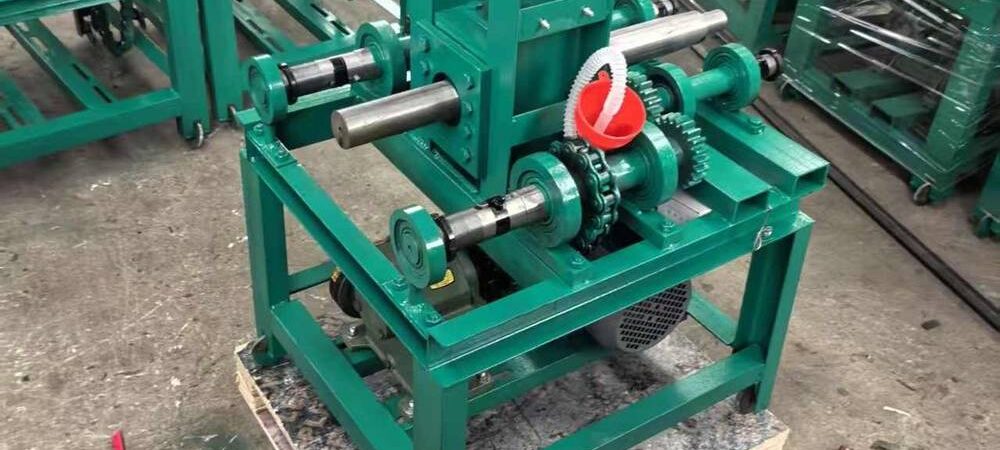
Based on everything above, the machine we confidently recommend for the Nigerian and African market is the TubeFab VB-38 Vertical Pipe Bender.
Here’s why it checks every box:
- Price: Approximately $450 USD — well within the budget of most African fabricators, with ROI achievable in 2–3 months
- Dual-Mode Operation: Works both manually and with a 230V/50Hz electric motor — bend with power, switch to manual when the grid goes down. No downtime, ever.
- Pipe Range: Handles 16mm to 38mm OD tubing — covering greenhouse hoops, furniture frames, railings, and irrigation pipes in one machine
- Vertical Design: Compact footprint, weighs only ~65 kg — affordable to ship and easy to move around the workshop or between job sites
- Simple Maintenance: No electronics, no hydraulic seals, no software — just lubricate the pivot points and keep it clean. Any local mechanic can service it.
- Replaceable Dies: Standard die sets available for every pipe size, shippable via DHL when needed. No proprietary lock-in.
- Angle Range: 0–120° with clear engraved markings — perfect for the most common bending applications in African fabrication
- Durability: Heavy-duty steel frame designed for daily industrial use — built to last 10+ years with basic care
The VB-38 is designed specifically with developing markets in mind. It’s the kind of machine that will still be working in your workshop ten years from now, long after fancier equipment has broken down and been abandoned for lack of spare parts.
Ready to Get the Right Pipe Bender for Your Business?
Choosing the right pipe bender for your African operation doesn’t have to be complicated. Focus on what matters: voltage compatibility, simplicity, durability, and supportability. The TubeFab VB-38 delivers on all four — at a price that makes sense for African businesses.
If you’re ready to equip your workshop — or if you just have questions about which bender fits your specific needs — we’re here to help. Contact TubeFab today for a detailed quotation, including FOB pricing, shipping estimates to your nearest African port, and guidance on customs documentation.
Email: info@tubefabtech.com
WhatsApp: +86-xxx-xxxx-xxxx
Website: www.tubefabtech.com
Tell us your pipe sizes, your typical bending angles, and your location — we’ll send you a tailored recommendation and quote within 24 hours. Let’s get your business bending.