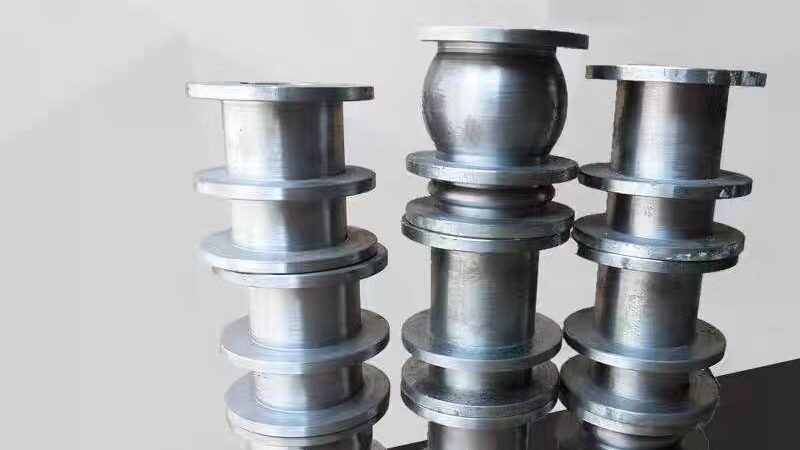
The real CNC pipe bending machine price is not just the sticker value on the invoice; it is the sum of tooling, maintenance, scrap material, and operator time. If you only look at the base machine cost, you will miscalculate your return on investment. A $6,000 CNC bender might outperform a $12,000 competitor in high-mix, low-volume shops, while a $400 vertical electric bender might actually be the smarter financial move for standard greenhouse hoops. Let us break down the actual economics of pipe bending to help you allocate your capital correctly.
The Hidden Economics of Machine Pricing
Most buyers operate under the assumption that a higher CNC pipe bending machine price guarantees better accuracy and profitability. In reality, for 80% of standard fabrication jobs like handrails, basic furniture, and agricultural hoops, a multi-axis CNC machine is overkill. The hidden cost in fabrication is not the machine itself, but the programming time and tooling setup required for short production runs. A closed-loop vertical electric bender often yields a significantly better profit margin for batch sizes under 500 pieces because it entirely eliminates the CNC programming bottleneck. You spend less time at the control panel and more time actually bending pipe.
Key Technical Considerations That Drive the Price
Axis Control and Accuracy Standards
The primary factor separating a $5,800 machine from a $14,000 machine is the control system. High-end CNC platform benders utilize encoder digital displays and closed-loop angle control, holding a strict ±0.5° angle accuracy. This level of precision is mandatory if you are fabricating components that must adhere to ANSI B31.3 process piping tolerances or complex architectural geometries. Lower-priced manual or semi-automatic models rely on mechanical stops, which are perfectly adequate for ASTM A53 structural fencing but will fail on tight-tolerance aerospace or automotive chassis components.
Mandrel and Tooling Costs
When calculating your total CNC pipe bending machine price, you must factor in the tooling. Bending at a tight centerline radius (CLR)—specifically anything less than 3× the outer diameter (OD)—requires a mandrel and wiper dies to prevent the pipe wall from collapsing. Mandrel-ready options add to the initial capital expenditure, and buying a full set of mandrels, clamp dies, and bend dies for multiple pipe schedules can increase your total tooling budget by 15% to 20%.
Comparing Machine Types and Price Ranges
Understanding the exact capabilities of different machine classes helps you avoid overspending. Below is a direct comparison of our primary manufacturing lines to illustrate where your money goes.
| Machine Type | Base Price Range | Accuracy & Control | Best Application | Floor Space |
|---|---|---|---|---|
| Vertical Electric (Model 38/63/76) | $365 – $1,200 | Manual/Basic digital, high repeatability | Greenhouse hoops, handrails, furniture | Standard footprint |
| CNC Platform Pipe Bender | $5,800 – $14,000 | ±0.5° closed-loop, multi-axis encoder | Batch production, complex multi-bend, mandrel-ready | Requires larger horizontal clearance |
For a deeper breakdown of how these specific architectures handle different materials, you can read our detailed analysis on the differences between vertical and CNC pipe bending machines. If you are strictly focused on the financial breakdown, our comprehensive pipe bender price guide covers every hidden fee you might encounter during import.
Real Customer Case Study: High-Volume Handrail Fabrication
To understand how these numbers translate to the shop floor, consider a recent deployment for a commercial architectural fabricator in North America. They needed to upgrade their stair handrail production to meet tightening deadlines without sacrificing finish quality.
- Pipe material: 304 stainless steel (ASTM A554)
- Pipe diameter: 38.1mm OD (1.5-inch)
- Wall thickness: 1.5mm
- Bend radius: 114.3mm CLR (3×OD)
- Bend angle: 90°
- Application scenario: Commercial stair handrail sections
- Equipment model used: tubefabtech CNC Platform Pipe Bender (Multi-axis)
- Production batch size: 300 handrail sections per day
- Budget range: $8,500 for the CNC machine, $1.20 per bend operating cost
- Common problems encountered: 2° springback on 304 stainless, 3% ovality at the 114.3mm CLR without proper mandrel support
By investing in the mid-tier CNC platform model, the fabricator utilized the closed-loop encoder to automatically compensate for the 2° springback inherent in 304 stainless steel. They paired the machine with a custom mandrel to eliminate the 3% ovality issue at the tight 114.3mm CLR. The total CNC pipe bending machine price of $8,500 was recovered in under four months purely through the reduction of scrapped material and the elimination of secondary straightening operations.
Common Mistakes When Budgeting for a Pipe Bender
Fabricators frequently make three critical errors when evaluating the true cost of bending equipment. First, they ignore springback compensation. If your machine lacks the software or mechanical leverage to over-bend and compensate for material memory, your scrap rate will destroy your profit margin. Second, buyers underestimate tooling costs. Changing from a 1-inch OD to a 2-inch OD requires an entirely new set of dies; if your job shop handles varied sizes, your tooling budget will double. Third, many ignore the physical limitations of the pipe. Bending thin-wall tubing without a mandrel or internal support will result in kinking and wrinkling. If you are dealing with thin-wall materials, review our technical guide on how to prevent pipe kinking when bending to ensure you spec the right tooling from day one.
Choosing the Right Machine for Your Budget
If your shop primarily handles standard architectural and agricultural work, our Vertical Electric Pipe Benders (Models 38, 63, and 76) offer an unbeatable entry point. Priced between $365 and $1,200, the vertical design saves 60% of your floor space, and the electric motor drive provides clean, consistent power for 10-76mm OD pipes. They are CE certified and ready for global shipping.
However, if you are running high-volume batch production, require complex multi-plane bends, or need to bend thin-wall tubing with a mandrel, the CNC Platform Pipe Benders ($5,800-$14,000) are the necessary investment. The encoder digital display and multi-axis control transform your operation from a manual craft into a repeatable manufacturing process.
Frequently Asked Questions
What is the average CNC pipe bending machine price?
A fully functional, industrial-grade CNC platform pipe bender typically ranges from $5,800 to $14,000, depending on the number of axes, the inclusion of a mandrel system, and the tonnage required for your specific pipe schedules. Basic manual or semi-auto electric benders start much lower, around $365.
Do I need a CNC bender or is a vertical electric bender enough?
If you are bending simple 90° or 180° bends for greenhouse hoops, basic furniture, or standard handrails, a vertical electric bender is more than enough and will save you thousands of dollars. You only need a CNC bender if you require multi-plane bends, extreme repeatability for batches over 500 pieces, or closed-loop angle control for tight-tolerance applications.
How much do replacement dies and tooling cost?
Tooling generally adds 15% to 20% to your initial machine investment. A standard set of clamp, bend, and wiper dies for a common size like 38.1mm OD will cost a few hundred dollars, while custom mandrel assemblies for thin-wall stainless steel can cost significantly more. Always request a tooling quote alongside your machine quote.
Get a Custom Quote
Calculating the exact CNC pipe bending machine price for your specific application requires analyzing your material specs, production volume, and tolerance requirements. Our engineering team is ready to review your drawings and recommend the most cost-effective setup. Contact us today with your pipe OD, wall thickness, and bend radius requirements to receive a detailed, transparent quote tailored to your shop floor.